(New Times & tomorrow, june 1993)
A miracle is in store for you, but you
aren't yet aware of it and arc full of doubts. The first
one creeps while they appear on the scene: provincial-looking
boys and girls wearing modest sweaters of indefinite colour
and shoes worn down at heels. The youngest of them is eight;
the oldest, fourteen. Why, are they jazzmcn? Too young to
play in a Big Band!
Your
scepticism grows as the children seat themselves at their
stands. How will they manage musical instruments meant for
grownups? The drummer is almost unseen beyond his percussion
instruments. The basso saxophone is a head higher than its
master. The bass guitar seems enormous and nearly falls
off a tiny girl's lap.
You are already prepared to listen to something very simple,
in the spirit of amateur school concerts, and to cheer up
the young talents by your condescending applause. But the
conductor gives a sign, the introduction begins - and you
can't believe your ears: a powerful rhythmic drive: one
breath; dramaturgy of rests; the incredibie ensemble work.
Groups sound steady; syncopes, accents, passages, exquisite
nuancing - all perfect, joyful and inspired. And no handicap
because of age. The audencc meets each improvization with
mounting ovations. This crescendo of applause is worth much:
almost half of the audience arc professional musicians,
some of them firstrate.
The performance by a children's orchestra from Krivoi Rog
led by Alcxander Ghebel became perhaps the major, but not
the only, sensation of the Big Band Festival held late this
May in the Moscow Estrada Theatre. The Festival itself,
organized jointly by the Moscow Jazz Association and the
GosCo jointstock company (Russia's biggest concert organizer),
was sensation enough. The President of the Association,
the well known musician and composer Yuri Saulsky, and his
sympathizers managed to do something incredible in our uneasy
times: they gathered seven first-rate en-sembles, not only
from various cities, but even from various countries, on
one scene at a time. This has so far never been accomplished
by anyone, even in America, the motherland of jazz.
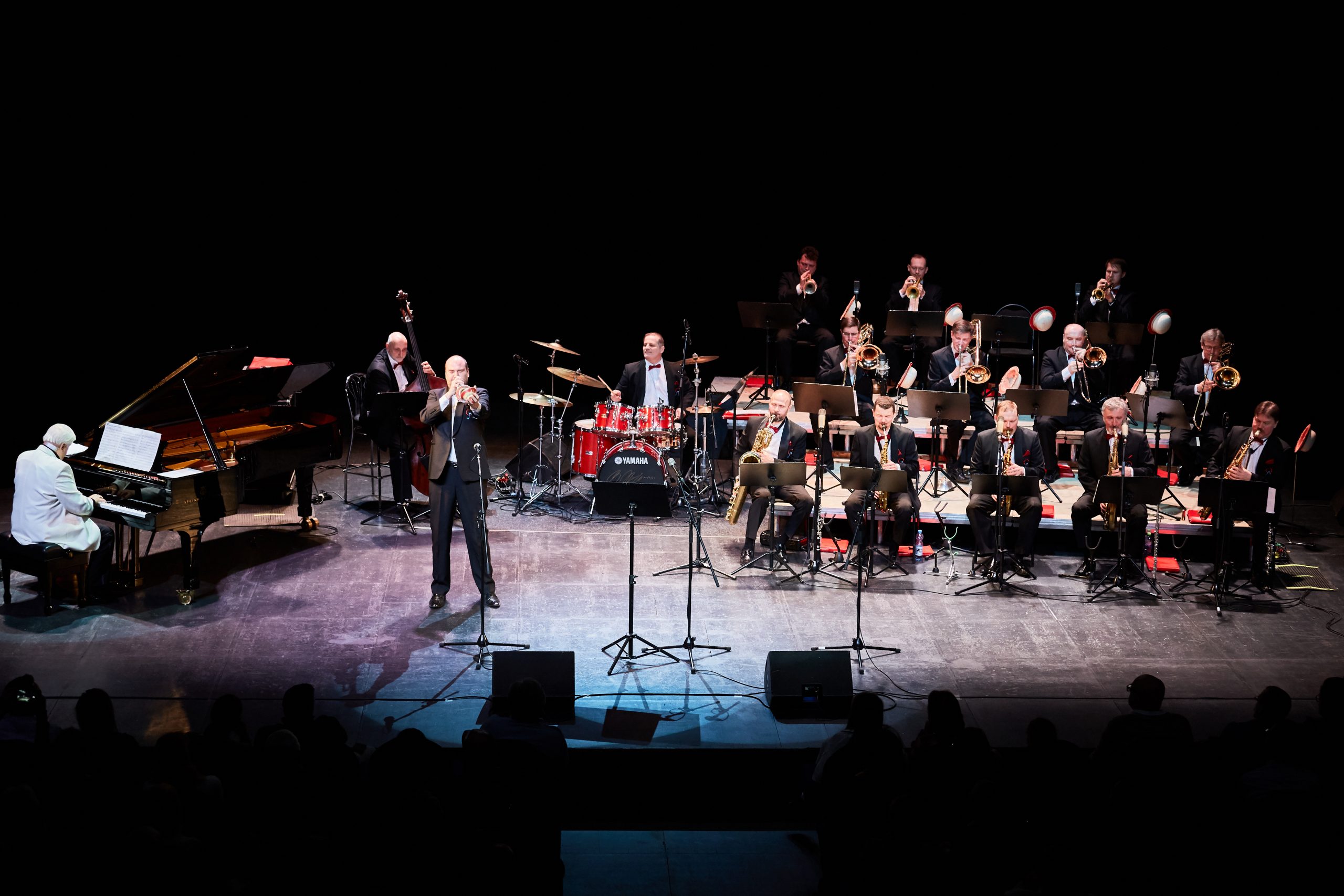
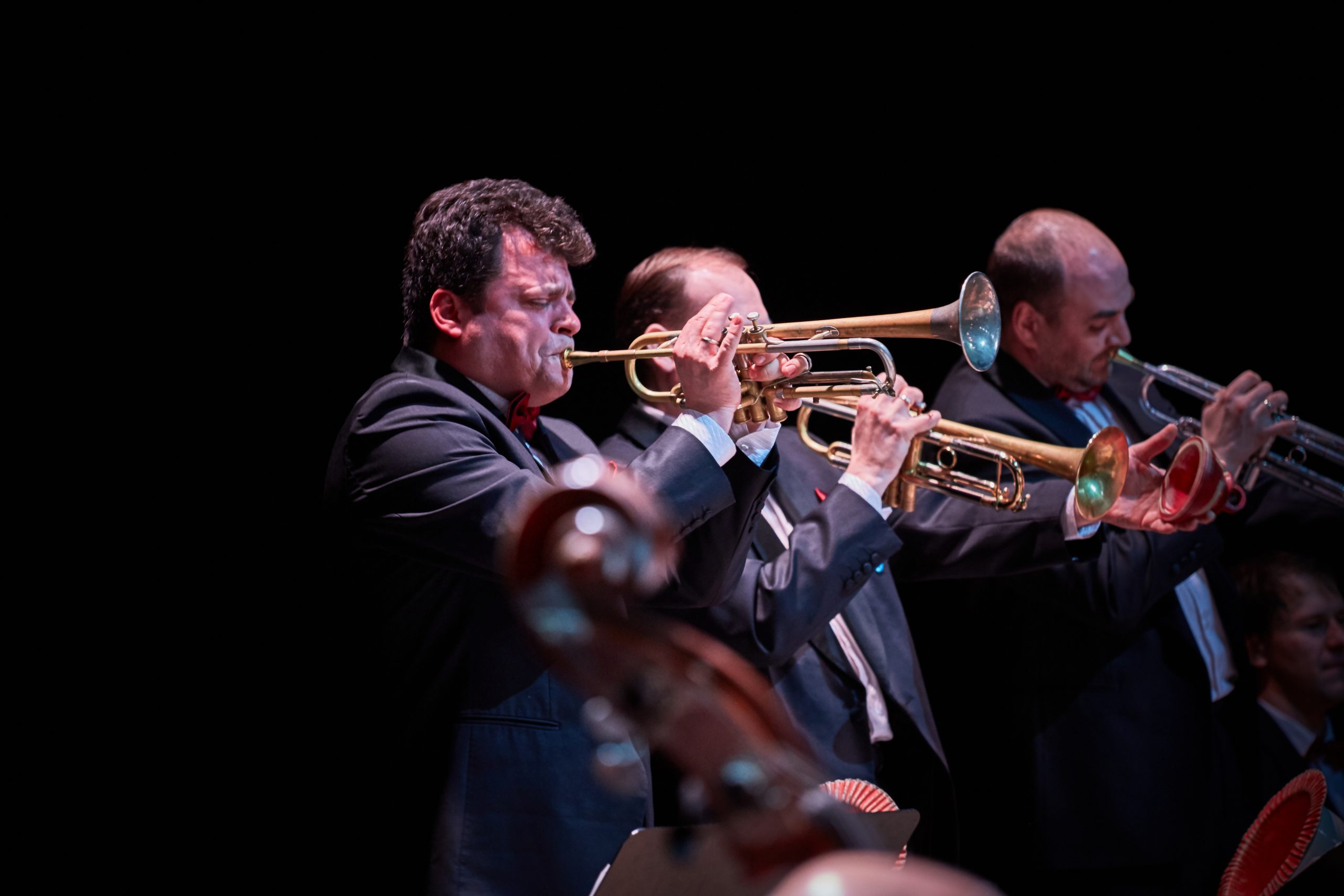
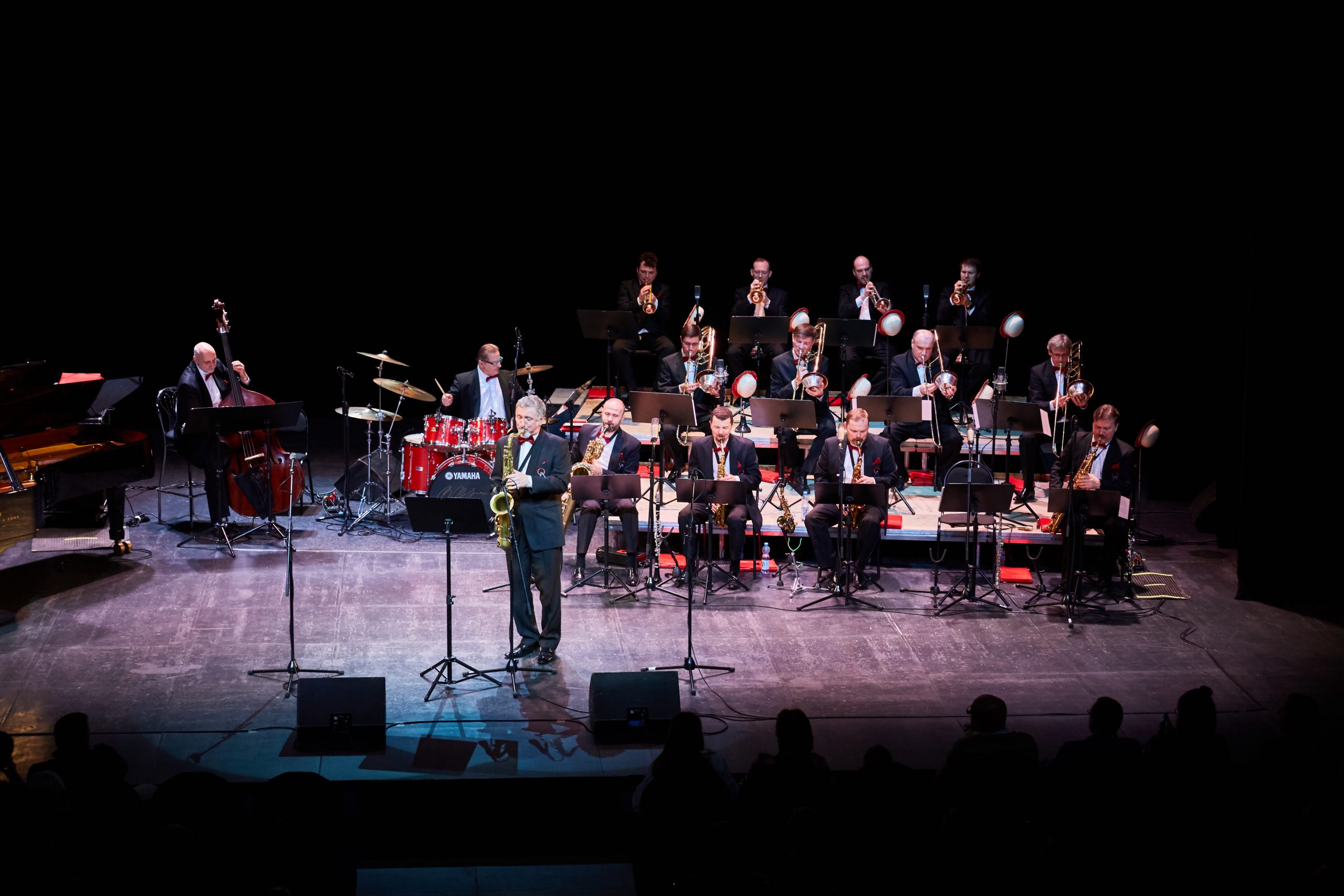
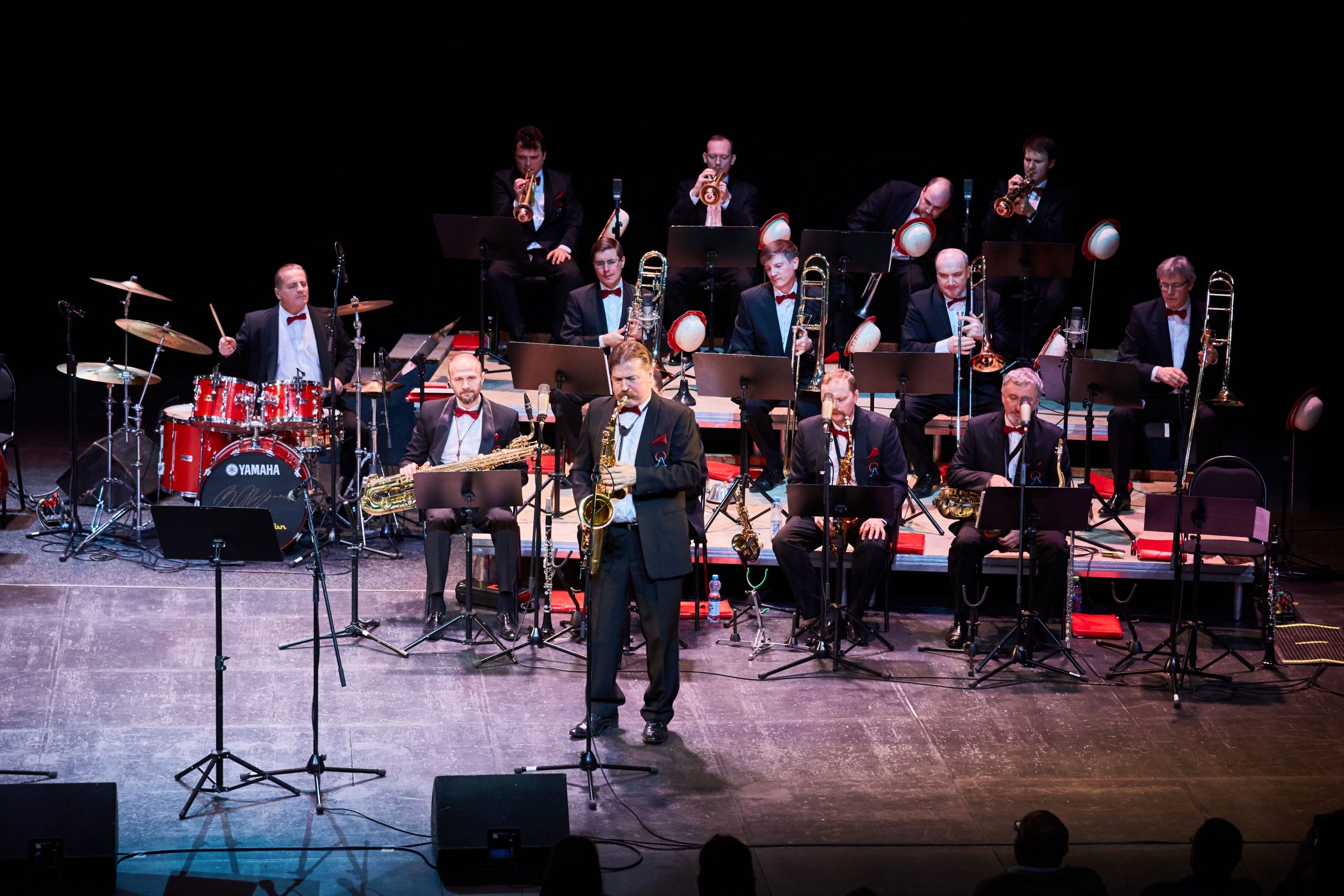
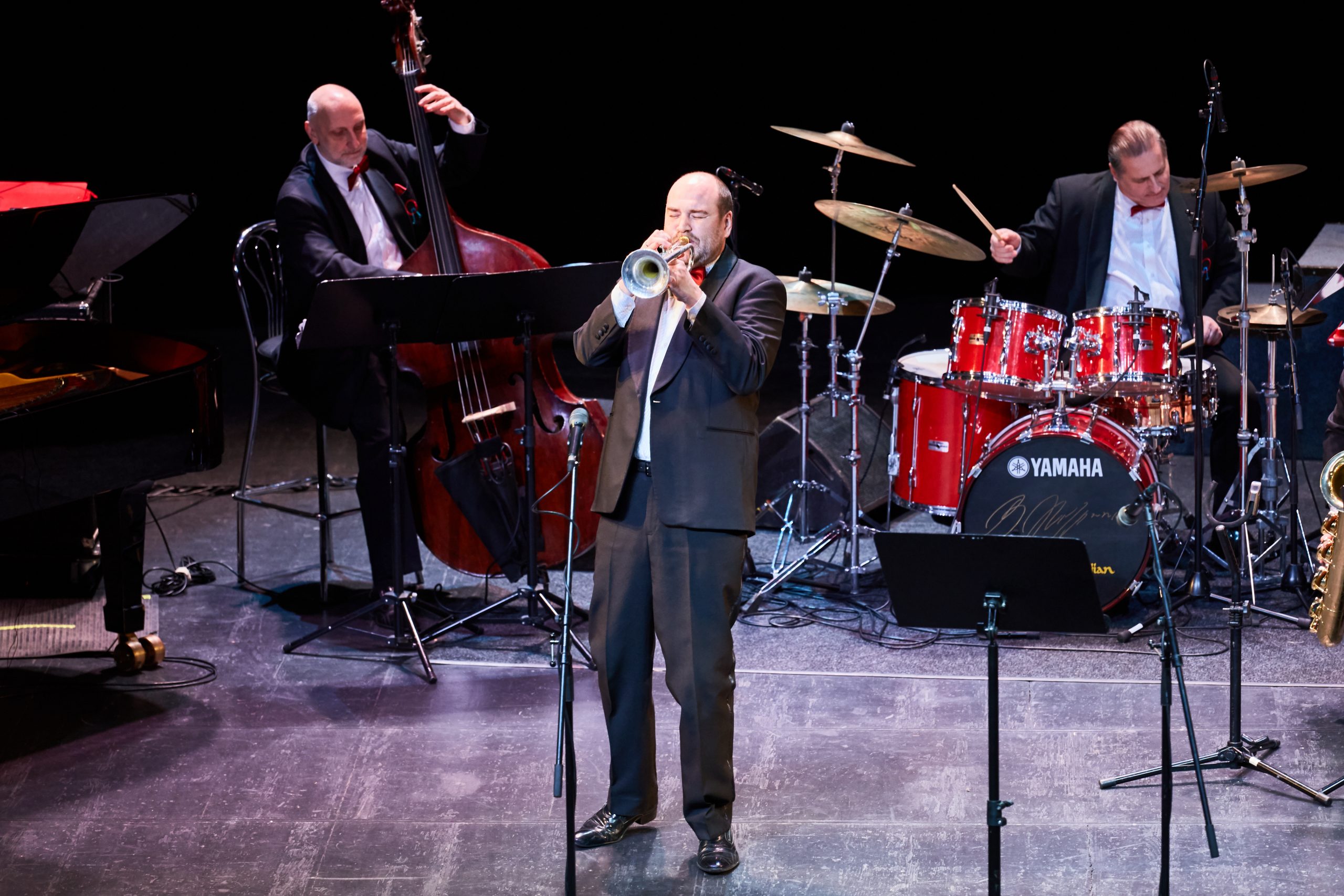
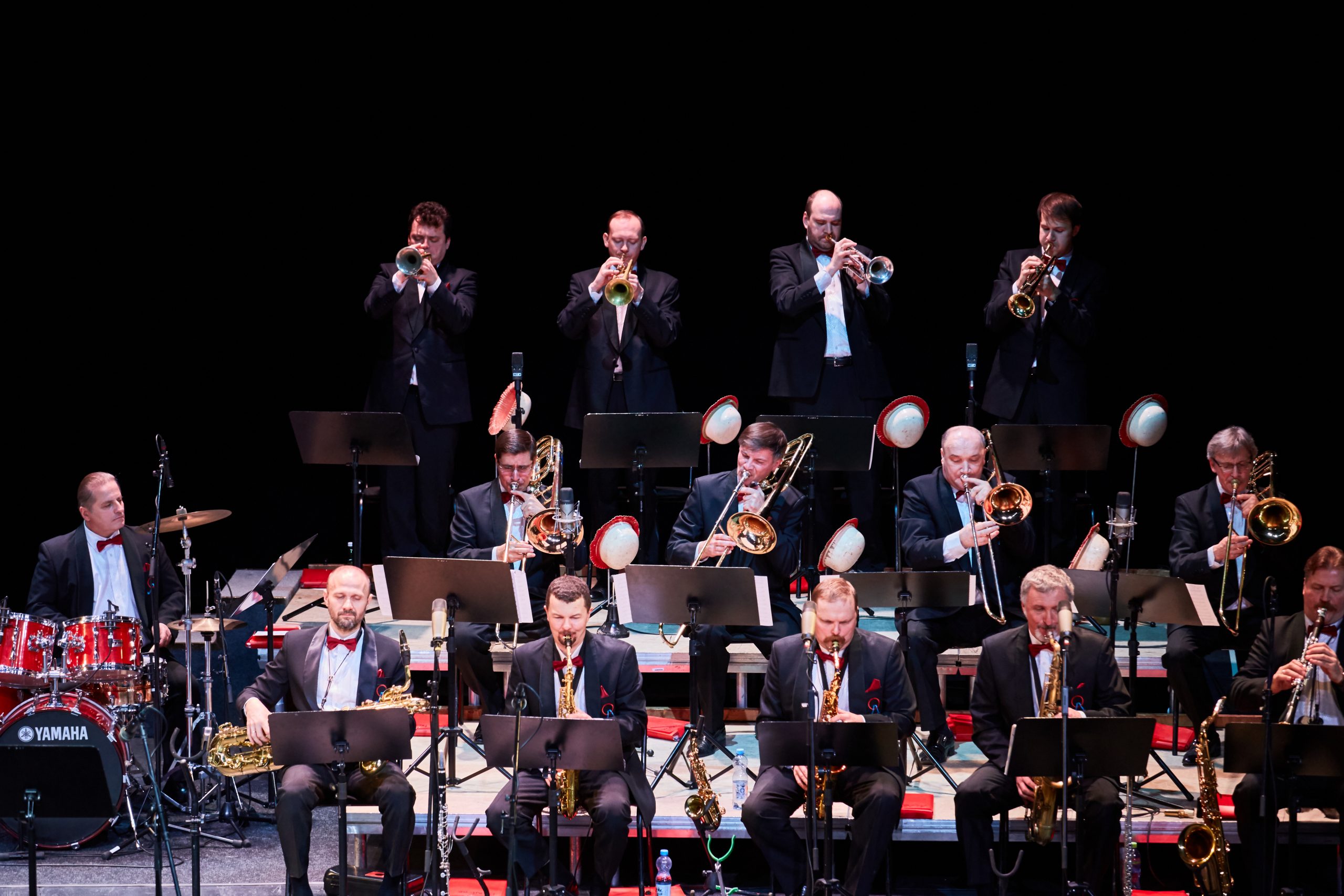
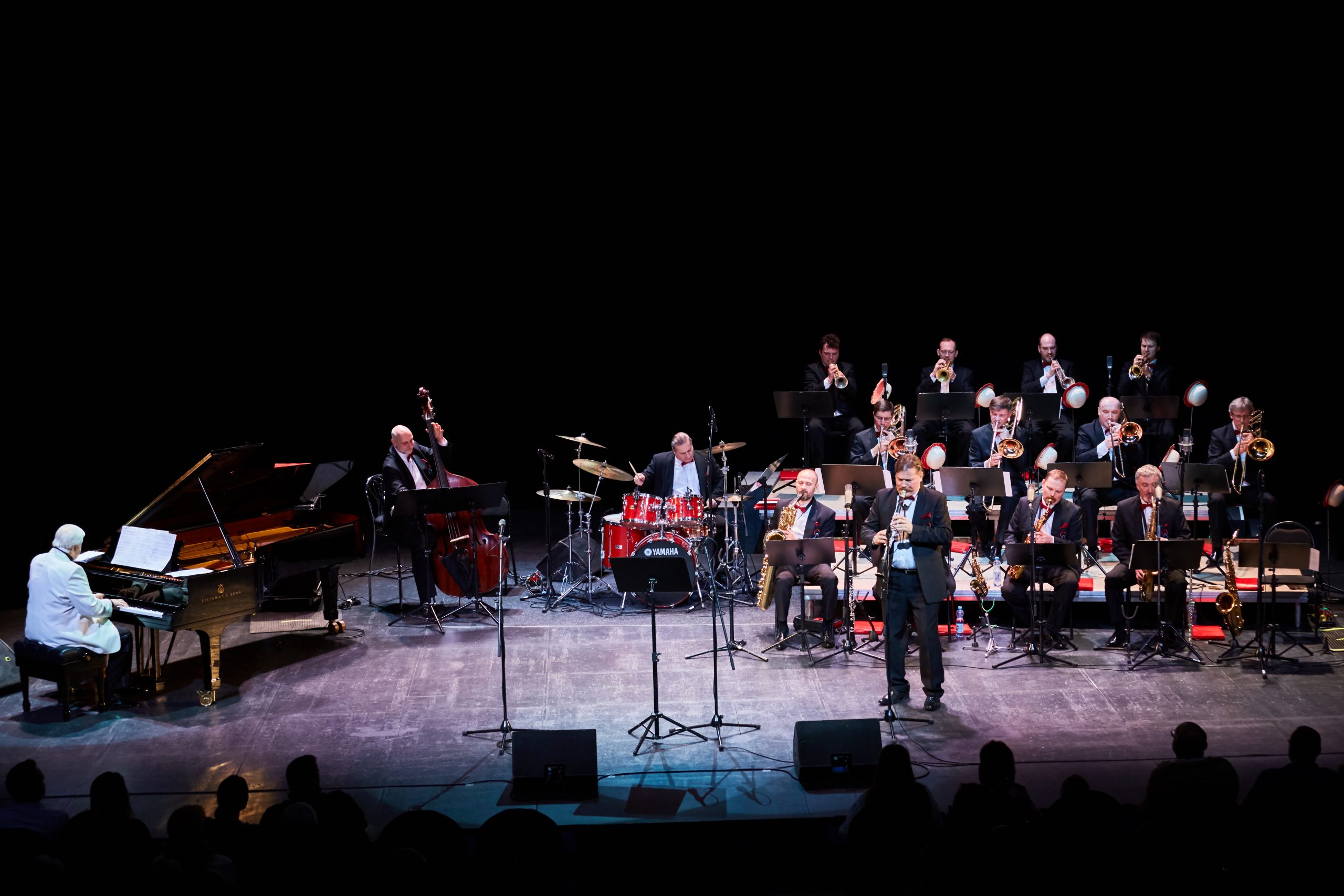
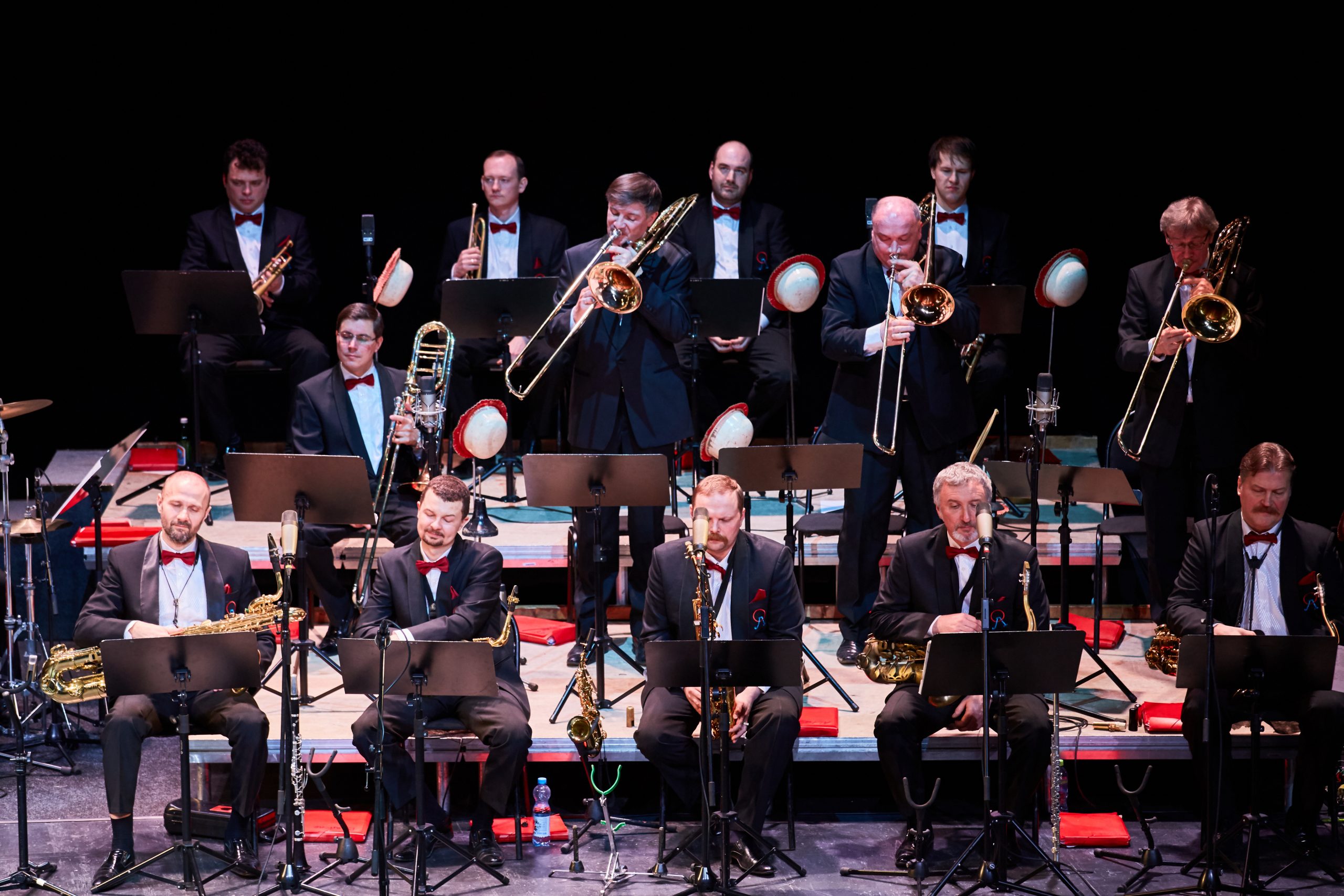
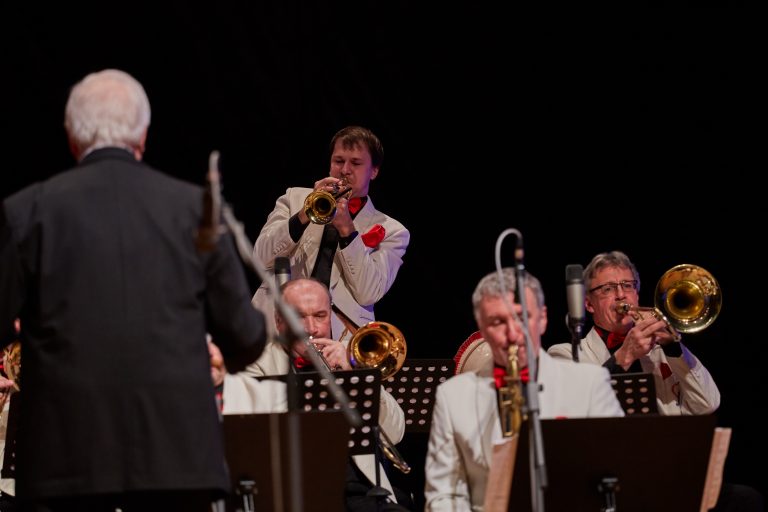
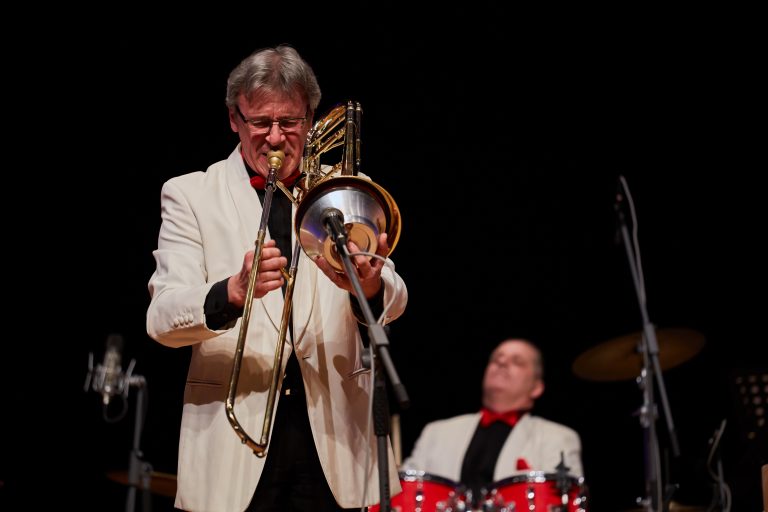
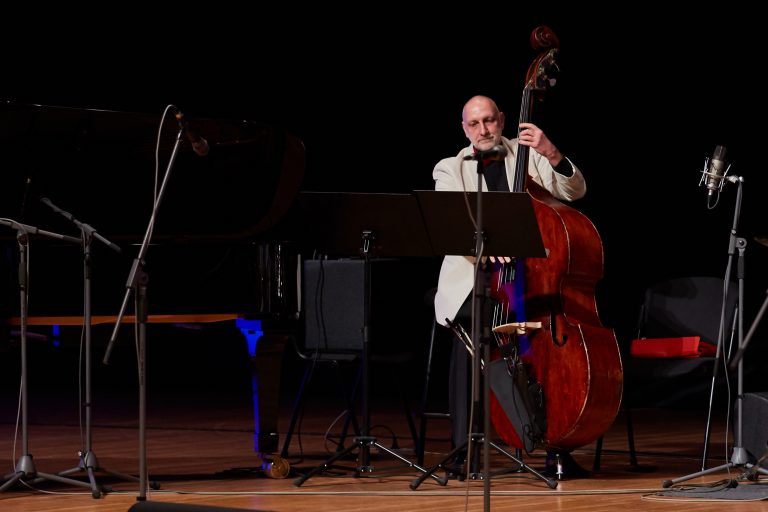
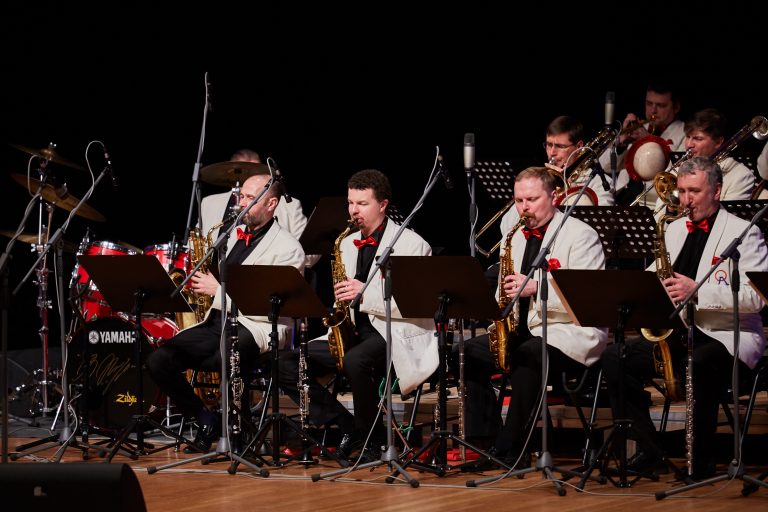
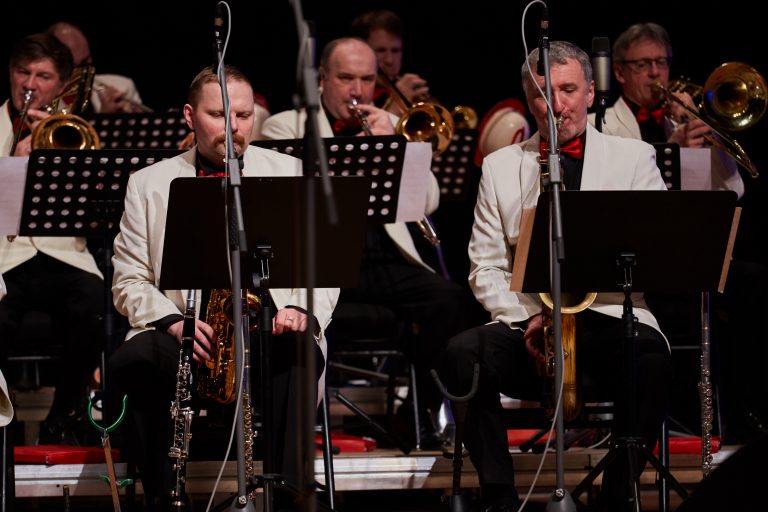
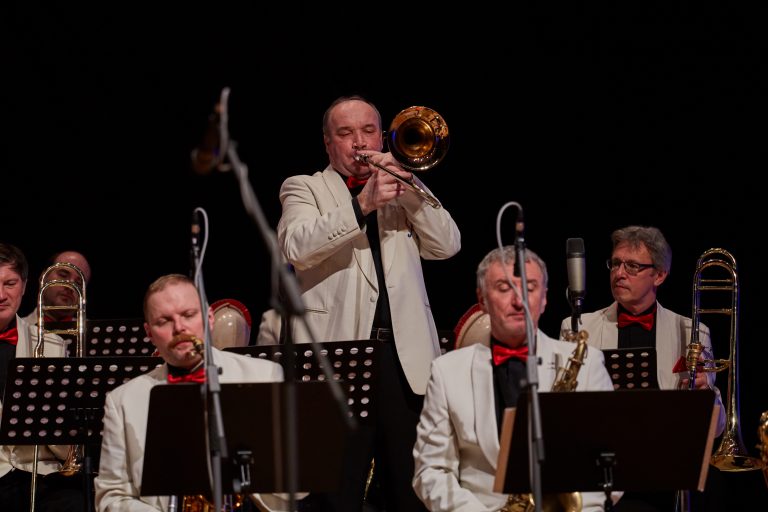
More than that. The Festival was opened by the Oleg Lundstrem
State Chamber Jazz Orchestra. which has every reason to
claim to an endorsement in the Guin-ness Book of Recods.
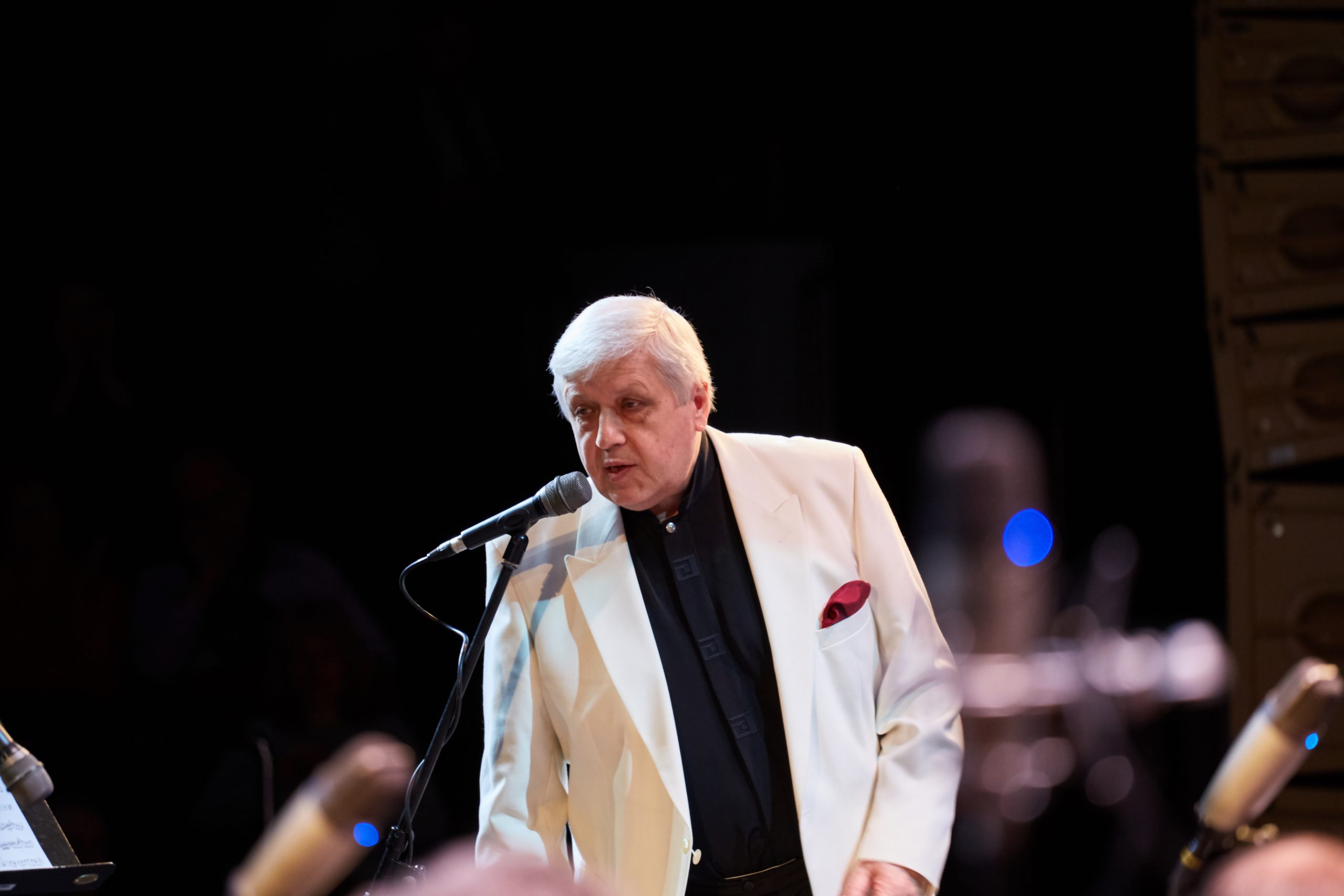
Oleg Lundstrem, 77, created his en-semble 59 years ago,
which makes it the oldest not only in Russia, but, it seems,
in the whole world.
For almost six decades this un-ique ensemble has survived
one world war and two Soviet leaders who regarded jazz as
an "im-perialist plague." "We've never played
for Stalin or Krushchev." says Oleg Lundstrem. "We've
al-ways played for common people who longed for our art
in spite î I all bans."
This remark was quite proper at a big jazz festival. In
our coun-try, the history of this optimistic and freedom-loving
art was full of really dramatic pages. People en-joyed the
excellent orchestras î I Zfasman, Varlamov, Minkh anil Rozner
in the 1920s and 1930s. when jazz flourished. But after
the war jazz happened to fall nearly the first victim to
the Cold War. Many outstanding musi-cians were declared
"cosmopoli-tans without kith or kin" and were
separated from their audi-ence. The renaissance came only
in the 1960s, when new young ta-lents began to appear and
a national jazz school and clubs emerged. But even after
that rock music, which bewitched the public, deprived jazz
of a considera-ble part of its young audience. And yet...
"That an unprecedented Big Band parade is taking place
in Moscow today is both unexpected and natural," believes
Yuri Saulsky. "Jazz was one time banned and other time
allowed; but like any genuine art, it has endured every
hardship, retaining its world-class musi-cians and its audience."
The outstanding mastership of the most well-known CIS jazz
ensembles which performed at the Festival, and the full
house are the exhaustive evidence to it.
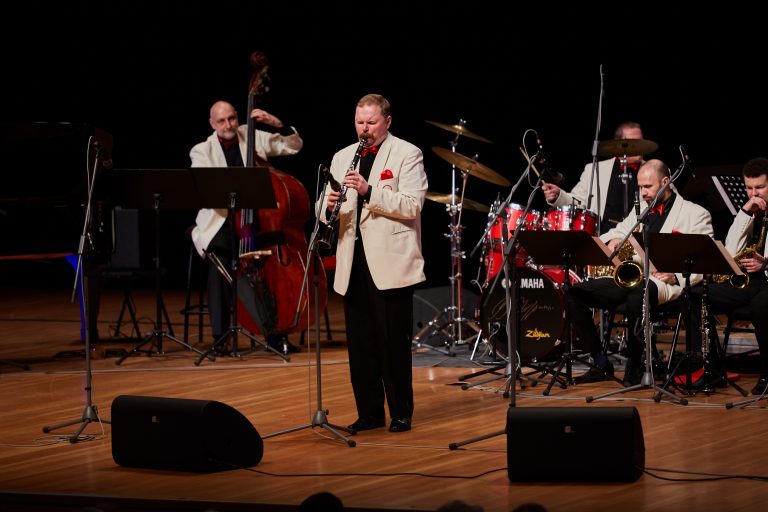
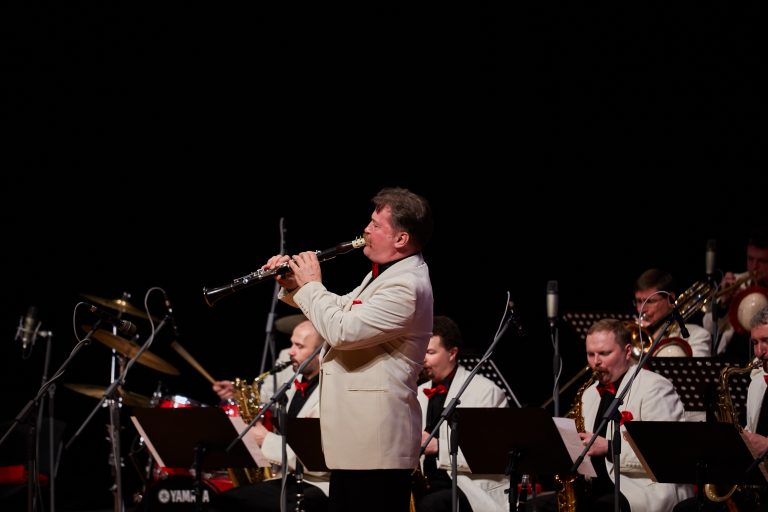
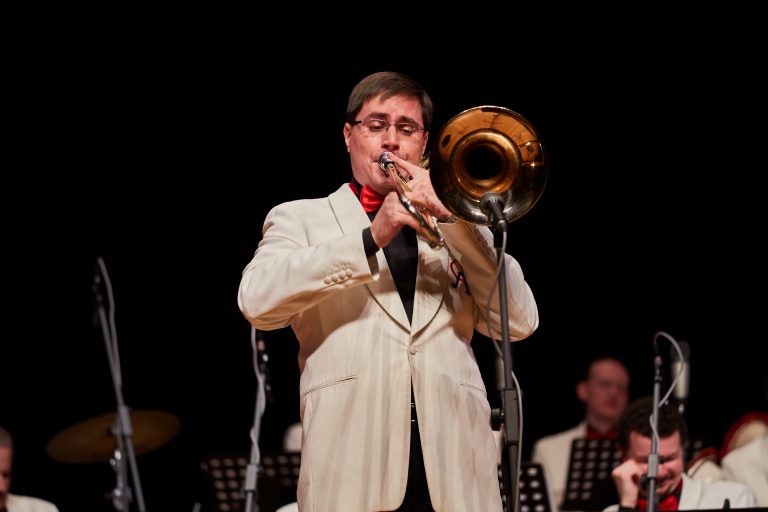
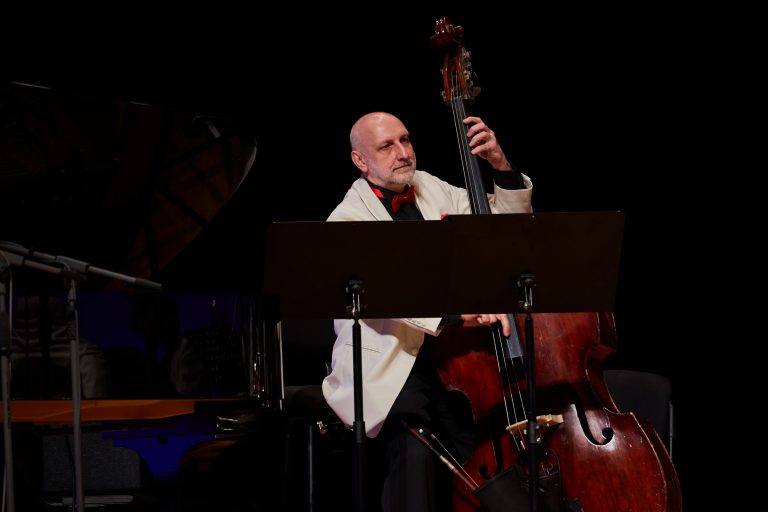
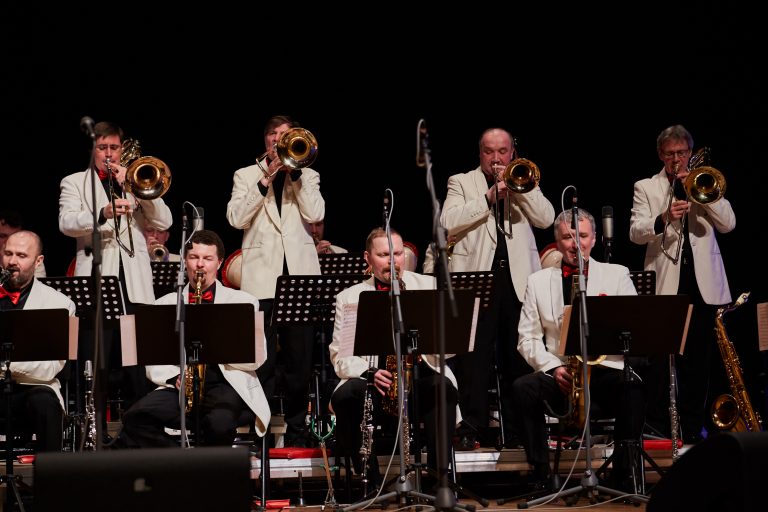
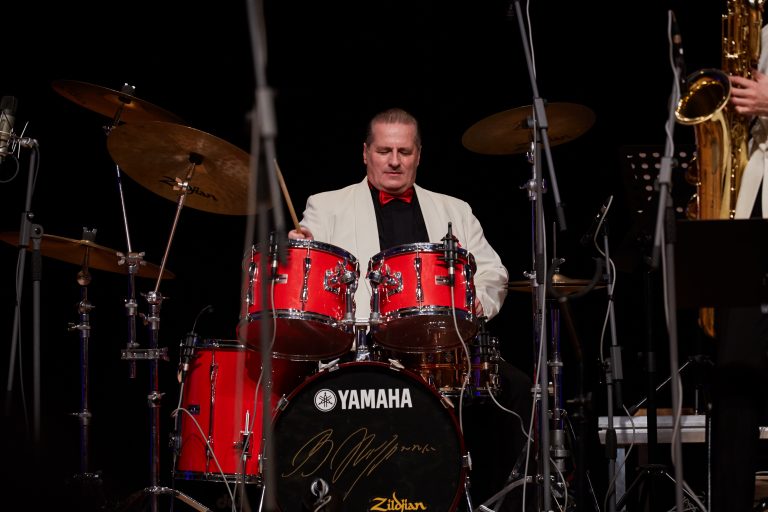
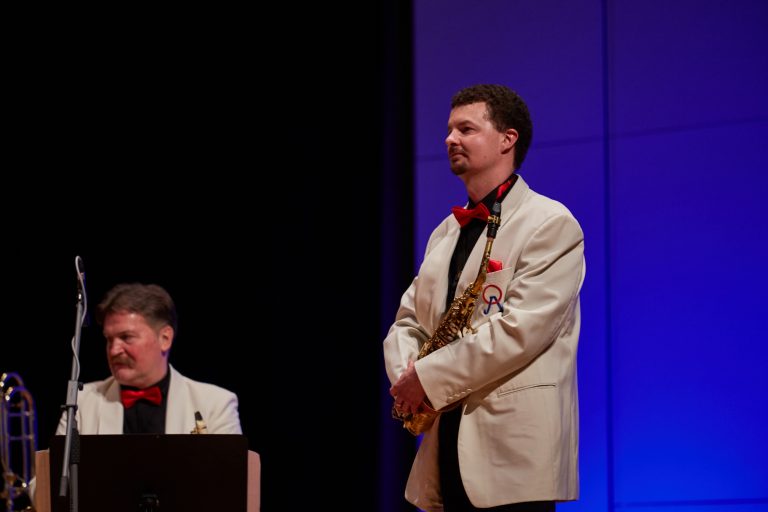
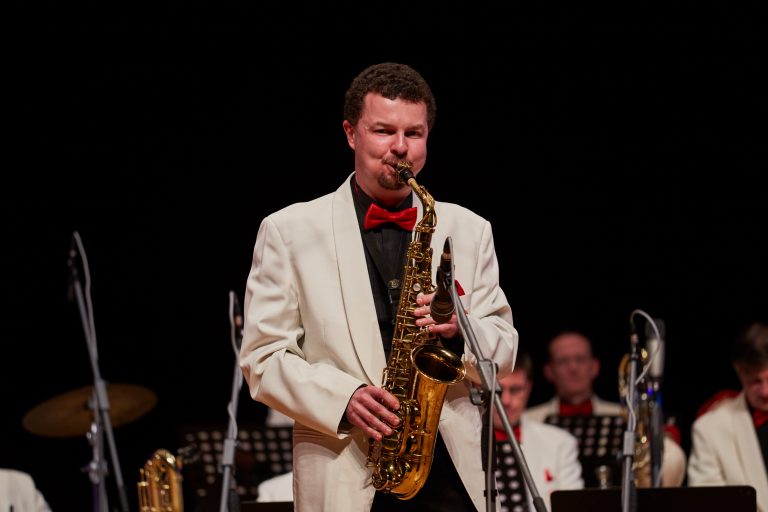
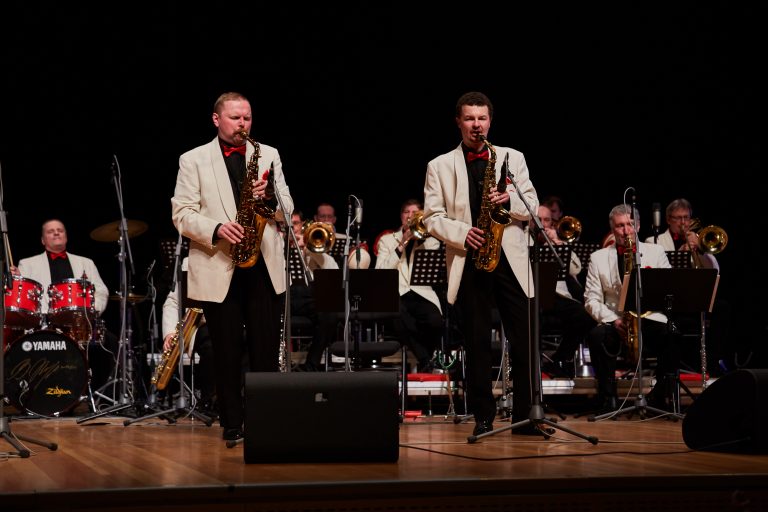
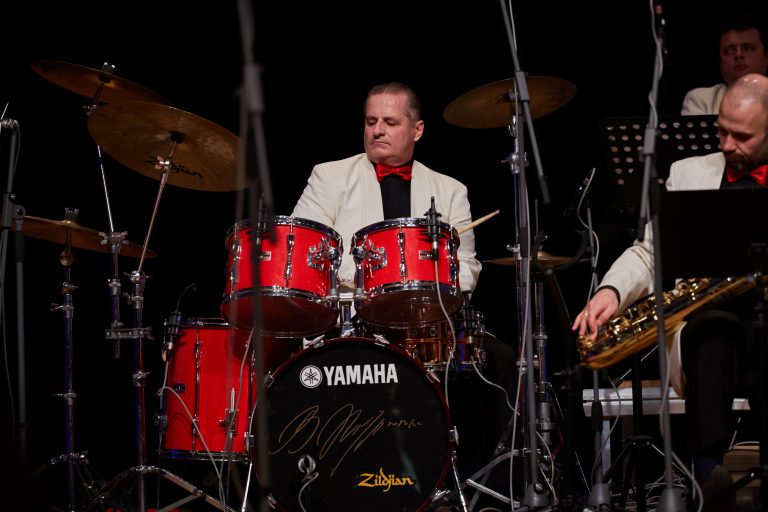
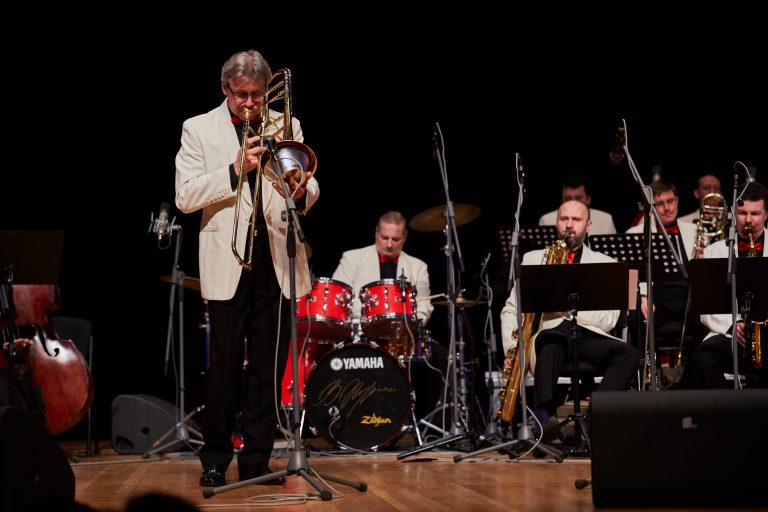
The seven jazz bands which took part in the Festival created
music in our eyes, and each in its own way. The swing "retro"
tradition, elements of the "prog-ressive" style,
and vanguard experiments draw a multi-colour picture of
the styles of contemporary jazz leaders, and each ensemble
confirmed its own place in it. The brilliant performance
of fragments of the cycle "Music of the World's Best
Big Bands" by the Belarus band led by Mikhail Finberg,
the heir to the famous Eddie Rozner band, revived our memories
of the intransient values of classical music of Duke Ellington,
Count Basie and Glenn Miller. Swing classics and contemporary
scripts are the basis of the repertoire of the orchestra
led by the patriarch of jazz, Oleg Lundstrem. The Novosibirsk
band led by Vladimir Tol-kachev, which stands out for a
special quality of band sound, literally astonished the
audience by its interpretation of Ger-shwin's "Summertime."
Our musicians derive inspiration not only from overseas.
A participant of many domestic and foreign jazz festivals,
the Municipal Rostov-on-the-Don Jazz Band led by Kim Nazaretov
has recorded Murad Kazhlayev's author's disc and re-peatedly
returns to works by domestic composers. One of the most
interesting and promising in this respect turns out to be
the Urals Jazz Band led by Nikolai Baranov, which was created
only two years ago. In it, a group of talented solo-ists,
forming small jazz combos, draw the public's attention.
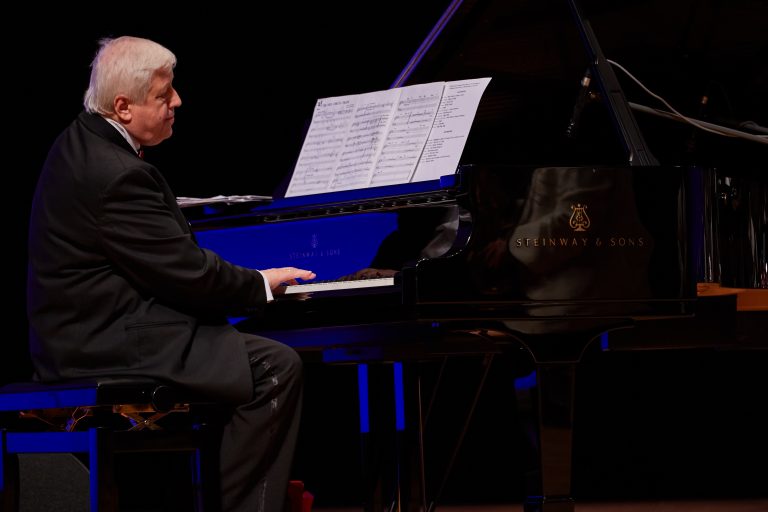
And the still younger ensemble led by our famous composer
and pianist Anatoly Kroll, which specializes in jazz "ever-greens"
in their original ver-sions, caused a special admira-tion
of the public by excellent female singing.
And last but not least, our young musicians. Their leader
Alexander Ghebel, a person of a surprising natural gifts,
writes most compositions and makes most arrangements for
them himself. He sparkles with new themes and new ideas.
Take, lor instance, his interpretations of Ukrainian folk
songs. Of course, Ghebel has to reckon with the possibilities
of young performers, but the audience is practically unaware
of it. Some "grown-up" ensembles have reasons
to envy the light, happy and free swinging style of the
band. "I try to raise the slat as high as possible,"
Ghebel told me. "And the kids never let me down."
Of course, the children do their best. But only God knows
what efforts their leader has to make - each year the hand
is renewed almost by half.
1 think that serious musicol-ogists will still have to unravel
the riddle of the unusual talent of Ale-xander Ghebel, this
extremely modest and charming teacher of music in a reg-ular
municipal music school. This is worth doing in the interests
of the future of our jazz. Who knows, perhaps the key to
this riddle are the words once said by the unforgettable
Charlie Parker: "Music is your own experience, your
wisdom, your thoughts. If you don't live by it, your instrument
will never produce any-thing of value. You are taught that
music has its own limits. But art has no limits, old buddy."
Sergei Golyakov
Back to contents